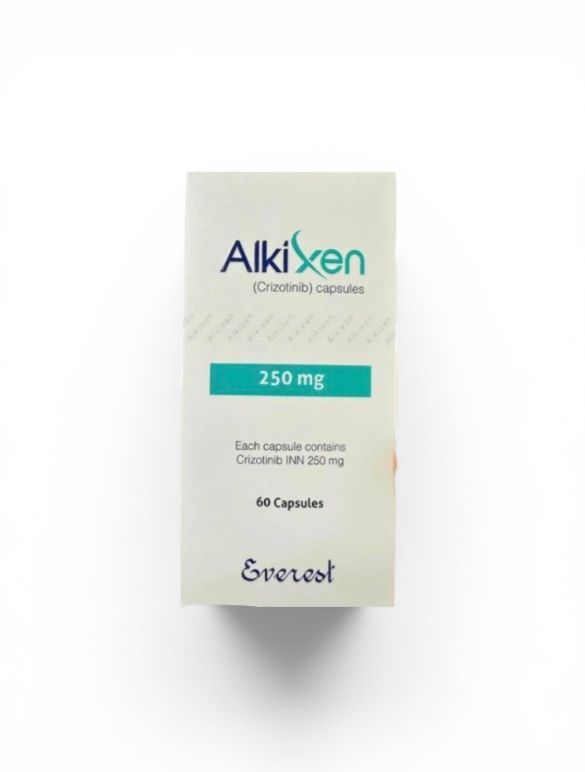
Alkixen 250 mg (mycophenolate mofetil) 60 capcules
€253
Oral immunosuppressant containing mycophenolate mofetil
In stock
Alkixen 250 mg (mycophenolate mofetil) 60 capcules
Product Details
Alkixen 250 mg: The Immunosuppressive Shield Protecting Transplanted Organs
Solid organ transplantation is an extraordinarily complex medical endeavor whose success hinges not solely on surgical technique but equally on the clinician's ability to suppress the body’s inevitable immune assault against foreign tissue. Alkixen 250 mg is an oral immunosuppressant containing mycophenolate mofetil, a drug that has become an indispensable cornerstone of modern immunosuppressive protocols. The 60-capsule pack is calibrated for one to two months of uninterrupted intake — precisely the duration required to establish stable blood concentrations and provide robust graft protection.
🔬 Mechanism of Action: Selective Blockade of Lymphocyte Proliferation
The key to Alkixen’s efficacy rests in its capacity to selectively inhibit the division of T- and B-lymphocytes — the principal cellular executors of the immune response.
Mycophenolate mofetil is a prodrug: upon oral ingestion, it undergoes rapid hydrolysis to its active metabolite, mycophenolic acid (MPA). MPA, in turn, reversibly inhibits the enzyme inosine monophosphate dehydrogenase (IMPDH) — a crucial link in the de novo synthesis of guanosine nucleotides.
Why does this matter? Most cells within the body can synthesize guanosine nucleotides via two pathways: de novo synthesis and the "salvage" (recycling) pathway. T- and B-lymphocytes, however, lack the salvage-pathway enzymes and depend entirely on de novo synthesis. By blocking IMPDH, mycophenolic acid deprives lymphocytes of the building blocks required for DNA and RNA production, thereby halting their clonal expansion in response to antigenic stimulation. Other cell types remain largely unaffected — they are capable of switching to the alternative pathway.
Thus, Alkixen:
- Suppresses the proliferation of activated lymphocytes in response to foreign graft antigens.
- Reduces the generation of cytotoxic T-cells, which directly attack transplanted tissue.
- Inhibits antibody synthesis by B-lymphocytes, forestalling humoral rejection.
- Spares most other dividing cells in the body, distinguishing it favorably from the more toxic immunosuppressants of earlier generations.
📋 Clinical Indications
Alkixen is prescribed as part of a combined immunosuppressive regimen (typically alongside calcineurin inhibitors — tacrolimus or cyclosporine — and glucocorticosteroids) for:
- Prevention of Acute and Chronic Rejection of Allogeneic Transplants:
- Kidney transplant.
- Heart transplant.
- Liver transplant.
- Treatment of Autoimmune Disorders (in select cases, determined by a multidisciplinary team):
- Lupus nephritis (renal involvement in systemic lupus erythematosus).
- ANCA-associated vasculitides with renal involvement.
- Interstitial lung diseases with an autoimmune component.
💊 Dosing Regimen and Practical Considerations
- Standard Adult Dose: 1000 mg (4 capsules of 250 mg each) twice daily. The total daily dose amounts to 2000 mg.
- Administration: Capsules are swallowed whole with a glass of water, irrespective of meals. However, to minimize gastrointestinal adverse effects, intake during or immediately after food is frequently recommended.
- Timing: The dosing interval is strictly 12 hours. Rigorous adherence to this schedule ensures stable plasma concentrations of mycophenolic acid.
- Lifelong Therapy: Following transplantation, Alkixen intake must continue indefinitely for as long as a functioning graft remains in place. Independent discontinuation or dose modification is categorically forbidden and may precipitate acute organ rejection.
Critical Teratogenicity Warning: Alkixen is a teratogenic drug. It is capable of causing severe congenital malformations and spontaneous abortions. Women of childbearing potential must use two reliable contraceptive methods concurrently prior to therapy initiation, throughout treatment, and for 6 weeks following its conclusion. Male patients taking the drug must likewise employ barrier contraception during treatment and for 90 days after its cessation.
⚠️ Contraindications
Alkixen must not be used in the setting of:
- Hypersensitivity to mycophenolate mofetil, mycophenolic acid, or any excipient.
- Pregnancy (categorically) and lactation.
- Pediatric populations (for this dosage form — the decision is rendered on a strictly individualized basis).
📊 Adverse Reaction Profile
The most commonly encountered side effects encompass:
- Hematological: Leukopenia, anemia, thrombocytopenia — routine complete blood count monitoring is mandatory.
- Gastrointestinal: Diarrhea, nausea, vomiting, abdominal pain.
- Infectious Complications: Immunosuppression heightens the risk of bacterial, viral (cytomegalovirus, Epstein-Barr virus), and fungal infections.
- Oncological Vigilance: Prolonged immunosuppression is associated with an elevated risk of lymphoproliferative disorders and skin malignancies.
📦 Storage Conditions
Capsules must be kept in a dry, light-protected location at a temperature not exceeding 25 °C (77 °F), out of the reach of children.
Concluding Principle: Alkixen is a prescription-only medication used exclusively under the supervision of a transplant physician or immunologist. Therapy demands regular monitoring of blood drug concentrations, graft function, and complete blood count parameters.
Important notice
The photograph is provided for product identification. Packaging design may vary by batch or market. This page provides general product information and does not replace the package leaflet, diagnosis, prescription or advice from a doctor or pharmacist.
Display prices in:EUR