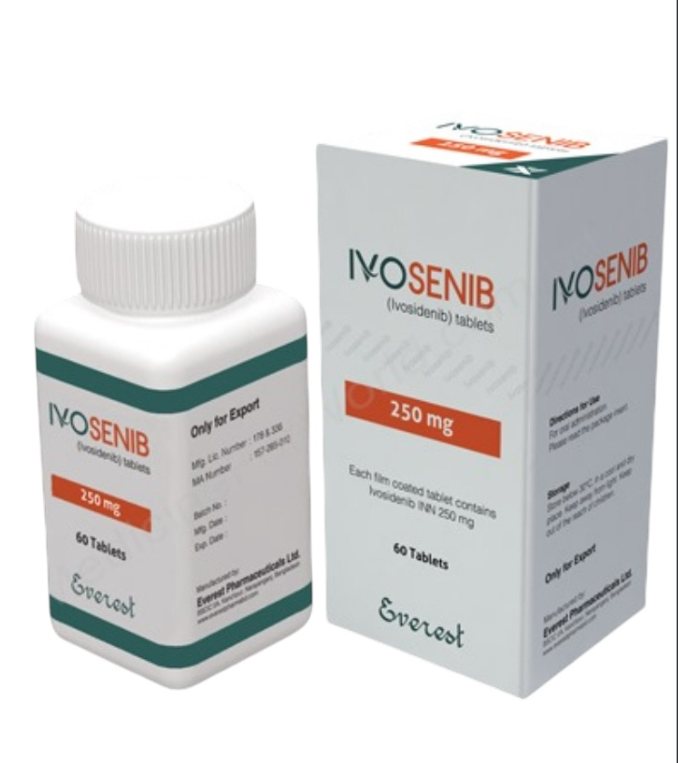
Ivosenib (Ivosedenib) 250 mg 60 tablets
€1 324
Oncology
In stock
Ivosenib (Ivosedenib) 250 mg 60 tablets
Product Details
Ivosenib (Ivosidenib) 250 mg: Targeted Inhibition of Mutant IDH1 in the Therapy of Acute Myeloid Leukemia and Solid Tumors
Contemporary oncology continues its decisive shift from universal cytotoxic chemotherapy toward molecularly guided interventions that strike precisely at a genetic target unique to a given tumor. Ivosenib is an oral inhibitor of the mutant isoform of isocitrate dehydrogenase-1 (IDH1), designed for the treatment of malignancies driven by a specific point mutation in the IDH1 gene. A pack of 60 tablets, each containing 250 mg, provides one month of continuous therapy at the standard daily dose of 500 mg (2 tablets). The drug belongs to the small-molecule class and embodies the core principle of personalized oncology: its prescription becomes possible only after genetic testing has confirmed the presence of the molecular target.
🧬 Pathogenesis and Pharmacological Target: Metabolic Reprogramming as a Driver of Carcinogenesis
Isocitrate dehydrogenase-1 (IDH1) is a cytoplasmic enzyme of the Krebs cycle that, under physiological conditions, catalyzes the oxidative decarboxylation of isocitrate to α-ketoglutarate (α-KG). Mutations in the IDH1 gene — most commonly the R132H substitution — provoke a dramatic shift in the enzyme’s catalytic activity: instead of performing its canonical reaction, it acquires a neomorphic capacity to convert α-KG into D-2-hydroxyglutarate (D-2-HG).
D-2-HG has justifiably been dubbed an «oncometabolite.» Accumulating in tumor cells at millimolar concentrations, it:
- Inhibits α-KG-dependent dioxygenases, including TET2 (a DNA demethylation enzyme) and prolyl hydroxylases. This leads to global hypermethylation of DNA and histones, effectively silencing the expression of tumor-suppressor genes and of genes governing the normal differentiation of hematopoietic cells.
- Arrests terminal differentiation of myeloid progenitors, locking them in a state of uncontrolled proliferation — this very mechanism underpins acute myeloid leukemia (AML) harboring an IDH1 mutation.
- Fosters an immunosuppressive microenvironment by suppressing the activity of cytotoxic T-lymphocytes.
Ivosenib binds to the mutant IDH1 enzyme and allosterically blocks its neomorphic activity. D-2-HG production plummets, thereby releasing the brakes on normal cellular differentiation programs, halting leukemic proliferation, and, potentially, restoring elements of antitumor immune surveillance.
📋 Clinical Indications
Ivosenib is prescribed exclusively following molecular genetic confirmation of an IDH1 mutation:
- Acute Myeloid Leukemia (AML) with an IDH1 mutation. The drug is indicated for adult patients with newly diagnosed AML who are ineligible for intensive induction chemotherapy, as well as for those with relapsed or refractory disease.
- Cholangiocarcinoma with an IDH1 mutation. Employed in patients with locally advanced or metastatic cholangiocarcinoma who have previously received systemic therapy. This represents one of the first targeted agents to demonstrate efficacy against this aggressive bile-duct malignancy.
💊 Dosing Regimen and Administration Rules
- Standard Daily Dose: 500 mg (two 250 mg tablets) once daily.
- Method of Administration: Tablets are to be swallowed whole with water, irrespective of food intake.
- Duration of Therapy: Treatment is continued until disease progression or the emergence of unacceptable toxicity. Treatment interruptions and dose modifications are carried out at the discretion of the treating physician.
Missed Dose: If less than 12 hours have elapsed since the scheduled administration time, the missed dose should be taken immediately. If more than 12 hours have passed, the dose is skipped and the usual schedule is resumed the following day. Doubling the dose is strictly impermissible.
⚠️ Contraindications and Mandatory Monitoring
- Hypersensitivity to ivosidenib or any excipient in the formulation.
- Pregnancy and Lactation. The drug possesses embryotoxic and fetotoxic potential. Female patients of reproductive age must employ reliable contraception during treatment and for a defined period following its conclusion. Male patients whose partners are of childbearing potential are likewise advised to practice contraception.
- Severe Hepatic or Renal Dysfunction warrants cautious use and dose adjustment under rigorous medical supervision.
Laboratory Monitoring During Therapy:
- Complete blood count with differential (risk of anemia and thrombocytopenia).
- Hepatic transaminases and bilirubin (hepatotoxicity is a class-specific effect).
- Electrocardiography (QTc interval monitoring).
Differentiation Syndrome: A specific complication characteristic of agents that restore myeloid cell maturation. It may present with pyrexia, hypoxia, pulmonary infiltrates, pleural or pericardial effusion, and rapid weight gain. This condition mandates the immediate administration of glucocorticosteroids and hospitalization.
📊 Adverse Reaction Profile
The most common adverse effects encompass:
- Dyspeptic syndrome: nausea, vomiting, diarrhea.
- Fatigue and asthenia.
- Hematological toxicity: anemia, thrombocytopenia, and, less frequently, febrile neutropenia.
- Hepatobiliary disturbances: elevated ALT, AST, and bilirubin levels.
Should any adverse events arise, the patient is obliged to inform the treating physician, refraining from any independent dose adjustments.
📦 Storage
The tablets must be stored in the original packaging at a temperature not exceeding 25 °C (77 °F), in a location inaccessible to children, and protected from both moisture and direct sunlight.
Important notice
The photograph is provided for product identification. Packaging design may vary by batch or market. This page provides general product information and does not replace the package leaflet, diagnosis, prescription or advice from a doctor or pharmacist.
You May Also Like
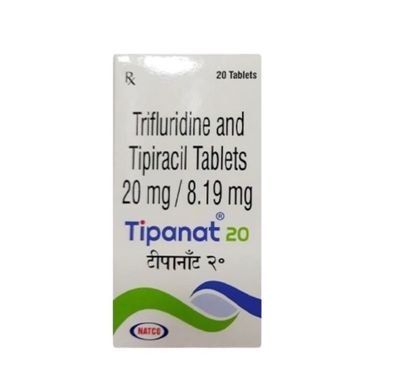
Tipanat (Trifluridine + Tipiracil) 20 mg/8.19mg 20 tab.
Tipanat (Trifluridine + Tipiracil) 20 mg/8.19mg 20 tab.
Oncology, antitumor drug
€285
Display prices in:EUR