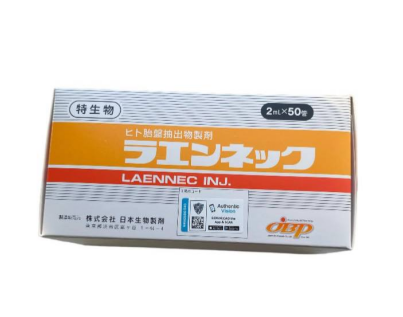
Laennec 2 ml 50 Ampoules
€424
Solution for injection
In stock
Laennec 2 ml 50 Ampoules
Product Details
Laennec 2 ml 50 Ampoules
Laennec: Harnessing Placental Bioregulation for Deep-Tissue Renewal
In the realm of modern aesthetic and anti-aging medicine, a special niche belongs to bioregulatory compounds that function at the cellular level. One of the most prominent products in this category is Laennec (50-ampoule pack). Its formula, derived from hydrolyzed human placenta extract, is engineered to trigger the body’s internal tissue repair mechanisms. Here’s a detailed look behind the name and guidance on its proper application.
🔬 Molecular Composition and Mechanism of Action
The core active substance is a human placenta hydrolysate that has undergone rigorous enzymatic processing. It’s far more than a simple collection of ingredients; it’s a sophisticated, multi-component cocktail of bioactive molecules:
- Building Blocks: Amino acids and low-molecular-weight peptides providing the raw material for the synthesis of collagen and elastin.
- Cellular Signals: Growth factors and cytokines that stimulate the proliferation of fibroblasts.
- Catalytic Micronutrients: A vitamin and mineral matrix that supports the metabolic machinery of skin cells.
This composition gives the substance a broad therapeutic spectrum, ranging from localized rejuvenation to the systemic management of chronic fatigue.
📋 Prescription Map: When Therapy is Justified
A dermatologist, cosmetologist, or general practitioner may recommend Laennec for the following clinical conditions:
- Aesthetic Deficits and Aging: Managing severe dryness, laxity, and diminished skin turgor, combating wrinkles and gravitational ptosis.
- Post-Acne and Scarring: Smoothing the skin's texture and fading stagnant spots or hyperpigmentation marks.
- Post-Procedure Rehabilitation: Accelerating tissue regeneration following laser resurfacing, chemical peels, and other invasive interventions.
- Systemic Support: Aiding the body during periods of chronic stress, extreme fatigue, and seasonal dips in immune function.
💉 Administration Protocols and Usage Methods
The pharmacy package contains 50 glass ampoules, each with a volume of 2 ml. Application methods span both invasive and non-invasive techniques:
- Injectable Route (Medical Procedures):
- Mode of Administration: Intramuscular, subcutaneous, and intradermal (microneedling/mesotherapy technique).
- Regimen: A typical treatment course consists of 5 to 10 sessions administered at a frequency of 1–2 times per week. The specific protocol is tailored strictly on an individual basis by the specialist.
- Topical Application (Home Care):
- The contents of an ampoule can be applied directly to the cleansed skin of the face, neck, or body in a pure state.
- For an enhanced cosmetic effect, the solution can be mixed with a basic moisturizer, serum, or face mask immediately prior to application.
⚠️ Red Flags: Contraindications to Consider
Despite its natural origin, strict limitations govern its use:
- Immune Response: Hypersensitivity or intolerance to any link in the formula's chain.
- Acute Phase: Any active infectious or inflammatory diseases at their peak stage.
- Organ Failure: Severe, decompensated kidney or liver dysfunction.
- Maternity: Pregnancy and the breastfeeding period.
📊 Safety Profile and Adverse Phenomena
Therapy is generally smooth and well-tolerated. Rare, expected reactions are usually limited to the injection site and include mild redness, slight swelling, or transient allergic rashes. Such phenomena typically resolve without intervention.
📦 Storage and Handling Rules
To preserve the bioactive properties of the hydrolysate, strict conditions apply: store the ampoules in a place shielded from UV light at a temperature up to 30°C (86°F). Freezing the product must be strictly avoided.
Critical Handling Note: Laennec contains no preservatives. Once the glass ampoule seal is broken, the liquid must be used immediately—it cannot be stored for later use.
🗝️ The Golden Rule of Responsible Rejuvenation
Laennec is a medical preparation, not a cosmetic toy. The primary principle is zero amateur experimentation. Only a clinically sound prescription from a qualified physician guarantees that this bioregulatory therapy yields benefits, not risks. Treatment courses are conventionally repeated no more than 1–2 times per year, giving the body the necessary interval to leverage its own physiological regeneration pathways.
Important notice
The photograph is provided for product identification. Packaging design may vary by batch or market. This page provides general product information and does not replace the package leaflet, diagnosis, prescription or advice from a doctor or pharmacist.
You May Also Like
Display prices in:EUR