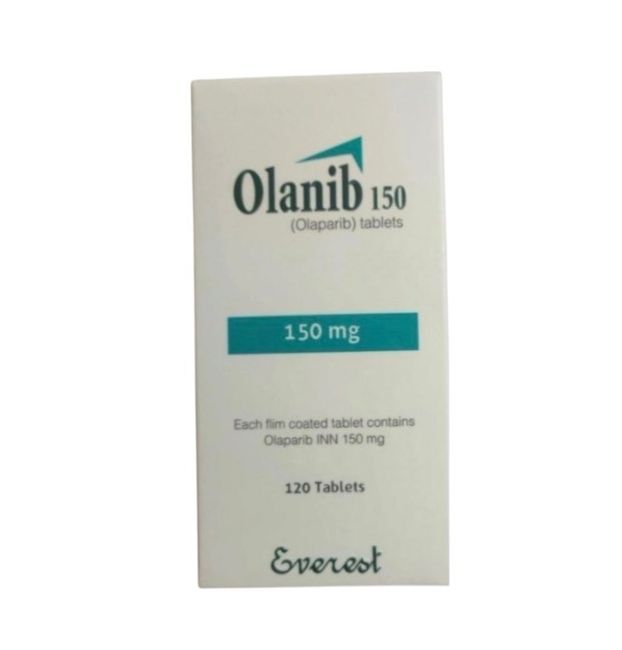
Olanib 150 mg 120 Tablets
€420
Oral PARP inhibitor (olaparib) for BRCA-associated malignancies
In stock
Olanib 150 mg 120 Tablets
Product Details
Olanib 150 mg: A Targeted PARP Inhibitor for the Treatment of BRCA-Associated Malignancies
Modern oncology is steadily moving away from one-size-fits-all chemotherapy toward a personalized medicine paradigm, in which the therapeutic weapon is selected based on the genetic portrait of an individual tumor. Olanib 150 mg is an oral targeted agent containing olaparib, a potent, selective inhibitor of PARP (poly-ADP-ribose polymerase) enzymes. The 120-tablet pack is designed for prolonged, uninterrupted maintenance therapy lasting months or even years — precisely the duration required to keep malignant cell growth in check and extend survival for patients with hereditary cancer syndromes.
🔬 Mechanism of Action: The Principle of Synthetic Lethality
Olaparib’s mechanism rests on the elegant concept of synthetic lethality — a circumstance in which a defect in each of two genes is, on its own, non-lethal to the cell, but their simultaneous disruption becomes catastrophic.
Under normal conditions, cells possess two pathways for repairing double-strand DNA breaks:
- Homologous Recombination (HR). An accurate, error-free mechanism whose key players are the BRCA1 and BRCA2 proteins.
- Non-Homologous End Joining (NHEJ). A faster but less precise pathway in which PARP enzymes play a critical role, recognizing breaks and preparing the damage site for repair.
In patients harboring BRCA1 or BRCA2 mutations (as well as defects in other homologous recombination genes), tumor cells are already devoid of the first, precise repair pathway. They become critically dependent on the second — the PARP-mediated route. Olaparib binds to the catalytic domain of PARP1 and PARP2 enzymes, blocking their enzymatic activity and, moreover, trapping PARP on the damaged DNA. These stable PARP-DNA complexes physically obstruct the replication fork, leading to the accumulation of unrepaired double-strand breaks. For tumor cells already stripped of BRCA-dependent homologous recombination, this spells one outcome: genetic collapse and apoptotic death.
Healthy cells, which retain a functional BRCA pathway, remain unharmed — they are able to compensate for PARP blockade and continue dividing without catastrophic consequences. It is precisely this selectivity that makes olaparib such a potent yet relatively well-tolerated agent.
📋 Clinical Indications
Olanib (olaparib) is approved for the treatment of the following patient populations:
- Ovarian Cancer.
- Maintenance therapy following complete or partial response to first-line platinum-based chemotherapy in patients with germline or somatic BRCA1/2 mutations.
- Maintenance therapy of recurrent platinum-sensitive ovarian cancer (irrespective of BRCA status).
- Treatment of patients with advanced ovarian cancer who have received three or more lines of chemotherapy and harbor a germline BRCA1/2 mutation.
- Breast Cancer.
- Treatment of HER2-negative, locally advanced or metastatic breast cancer in patients with a germline BRCA1/2 mutation who have previously received chemotherapy.
- Pancreatic Cancer.
- Maintenance therapy of metastatic pancreatic adenocarcinoma with a germline BRCA1/2 mutation that has not progressed on first-line platinum-based chemotherapy.
- Prostate Cancer.
- Treatment of metastatic castration-resistant prostate cancer with mutations in homologous recombination genes (BRCA1/2, ATM, and others) that has progressed following therapy with abiraterone or enzalutamide.
💊 Dosing Regimen
- Standard Dose: 300 mg (2 tablets of 150 mg each) twice daily. The total daily dose amounts to 600 mg.
- Dosing Interval: 12 hours.
- Administration: Tablets are swallowed whole with water, independently of meals. In cases of pronounced gastrointestinal side effects, intake during or immediately after food is permissible.
- Duration of Therapy: Until disease progression or unacceptable toxicity. In the maintenance setting for ovarian cancer, the course may extend over years.
- Dose Adjustment: Should significant myelosuppression develop (anemia, neutropenia, thrombocytopenia), dose reduction or temporary interruption may be warranted.
⚠️ Key Adverse Effects and Toxicity Management
Olaparib’s safety profile has been extensively characterized. The most frequently observed adverse events include:
- Hematological Toxicity. Anemia (declining hemoglobin), neutropenia, thrombocytopenia — these mandate regular complete blood count monitoring (monthly during the initial months of therapy, thereafter as clinically indicated).
- Gastrointestinal Symptoms. Nausea, vomiting, appetite loss, diarrhea. These are generally manageable with antiemetic agents and dietary modification.
- Asthenia and Fatigue. A common occurrence requiring paced physical activity and adequate rest.
- Myelodysplastic Syndrome (MDS) and Acute Myeloid Leukemia (AML). A rare but extremely serious complication, occurring more frequently in patients previously heavily treated with platinum agents and other DNA-damaging therapies.
📦 Storage Conditions
Tablets must be kept in the original manufacturer’s packaging, in a dry place at a temperature not exceeding 25 °C (77 °F). Keep out of the reach of children.
Core Principle: Olanib is a prescription oncology drug. Its prescription, dose modification, and toxicity surveillance are performed exclusively by a medical oncologist, grounded in genetic testing results and the overall clinical picture.
📦Find out about the delivery to your country on WhatsApp
Important notice
The photograph is provided for product identification. Packaging design may vary by batch or market. This page provides general product information and does not replace the package leaflet, diagnosis, prescription or advice from a doctor or pharmacist.
You May Also Like
Olaparid 150 mg 120 tablets
Olaparid 150 mg 120 tablets
Olaparib targeted therapy tablets for BRCA-associated cancers
€222
Display prices in:EUR