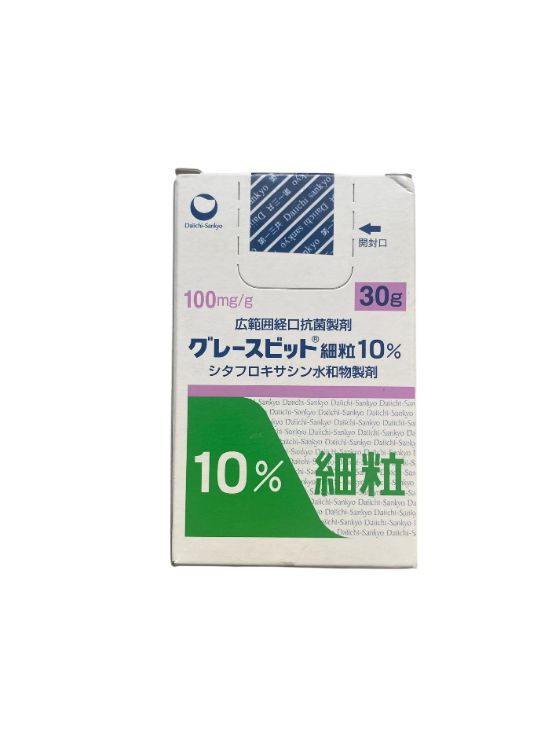
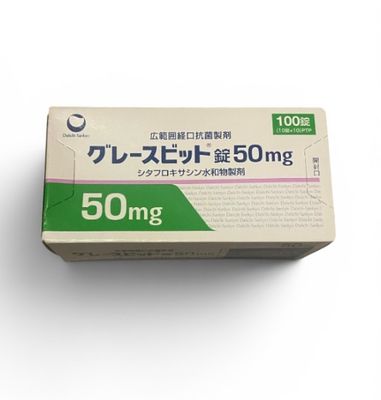
Sitafloxacin (Gracevit) 10 % 30 g
€204
antibiotic
In stock
Sitafloxacin (Gracevit) 10 % 30 g
Product Details
Sitafloxacin (Gracevit) 10% Granules: A Next-Generation Japanese Fluoroquinolone for Challenging Infections
The emergence of antimicrobial resistance represents one of the gravest challenges confronting modern medicine, and every new agent capable of overcoming bacterial defense mechanisms becomes a precious tool in the clinician’s hands. Sitafloxacin is a late-generation fluoroquinolone developed in Japan and marketed under the brand name Gracevit. The product takes the form of oral granules with a 10% active ingredient concentration (100 mg of sitafloxacin per 1 g of granules), packaged in a 30 g container. This format enables accurate dose measurement and offers convenience across varied patient age groups.
🔬 Pharmacological Profile: What Sets Sitafloxacin Apart
Sitafloxacin belongs to the fluoroquinolone class but is distinguished from its predecessors (ciprofloxacin, levofloxacin, moxifloxacin) by a unique chemical architecture that confers several advantages:
- Ultra-Broad Spectrum of Activity. The drug is active against Gram-positive cocci (including methicillin-resistant staphylococcal strains and penicillin-resistant pneumococci), Gram-negative bacilli (including extended-spectrum beta-lactamase producers), and anaerobic microorganisms. This favorably differentiates it from many other fluoroquinolones, whose anti-anaerobic potency leaves much to be desired.
- Dual Bactericidal Mechanism. Like other members of the class, sitafloxacin inhibits two vital bacterial enzymes — DNA-gyrase and topoisomerase IV. However, its affinity for both targets is balanced so successfully that the development of resistance requires simultaneous mutations in both genes — a statistically improbable event. This translates into activity against strains already resistant to other fluoroquinolones.
- High Oral Bioavailability. Upon ingestion, the drug is well absorbed, attaining therapeutic concentrations in the tissues of the respiratory tract, urinary system, ENT organs, and the oral cavity.
📋 Evidence Base and Clinical Indications
Sitafloxacin’s efficacy has been substantiated in randomized, double-blind, multicenter clinical trials. The drug is approved in Japan for the treatment of the following infections:
- Respiratory Tract Infections.
- Community-acquired pneumonia. Studies have demonstrated that oral sitafloxacin is therapeutically non-inferior to levofloxacin and tosufloxacin.
- Acute infectious exacerbation of chronic bronchopulmonary diseases.
- Urinary Tract Infections.
- Complicated UTIs, where sitafloxacin has shown efficacy comparable to that of oral levofloxacin.
- Buruli Ulcer (infection caused by Mycobacterium ulcerans) — one of the drug’s rare but clinically important niches.
- Otorhinolaryngological Infections. Confirmed or suspected bacterial ENT processes.
- Urogenital Infections:
- Male urethritis.
- Chlamydia trachomatis-associated cervicitis in women.
- Odontogenic Infections — bacterial processes of the maxillofacial region.
💊 Dosing Regimen and Formulation Details
The product consists of granules to be dissolved in water prior to intake.
- Concentration: 10% — corresponding to 100 mg of sitafloxacin per 1 gram of granules.
- Standard Daily Dose: 1 g of granules (100 mg of active ingredient).
- Maximum Daily Dose: 2 g (200 mg) — strictly upon physician prescription in specific clinical scenarios.
- Course Duration: Determined by the treating physician based on the infection site, its severity, and the trajectory of clinical response.
⚠️ Safety Profile and Tolerability
In clinical trials and post-marketing surveillance, the most commonly reported adverse events with oral sitafloxacin were:
- Gastrointestinal Disturbances. As with other fluoroquinolones, the drug may provoke nausea, epigastric discomfort, and diarrhea.
- Laboratory Abnormalities. Transient shifts in biochemical and hematological parameters.
Attention must be paid to the class-specific effects of fluoroquinolones, which include: the risk of tendinitis and tendon rupture (especially in elderly patients and those concurrently receiving glucocorticosteroids), potential QT interval prolongation on the ECG, and phototoxicity (prolonged sun exposure should be avoided throughout the treatment period).
📦 Storage Conditions
Granules must be stored in the tightly sealed original container, in a dry place protected from light and inaccessible to children. The temperature regime is as specified in the manufacturer’s instructions, generally not exceeding 25–30 °C (77–86 °F).
Manufacturer Daiichi Sankyo Co., Japan
📦Find out about the delivery to your country on WhatsApp
Important notice
The photograph is provided for product identification. Packaging design may vary by batch or market. This page provides general product information and does not replace the package leaflet, diagnosis, prescription or advice from a doctor or pharmacist.
You May Also Like
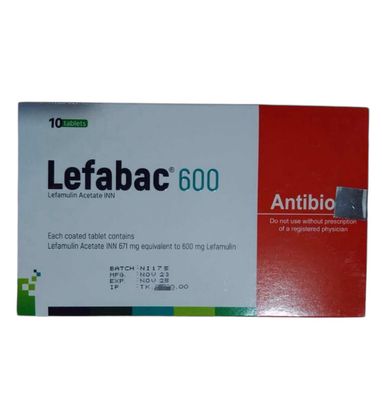
Lefamulin (Lefabac) 600 mg 10 tablets
Lefamulin (Lefabac) 600 mg 10 tablets
Lefamulin 600 mg, 10 film-coated tablets
€249
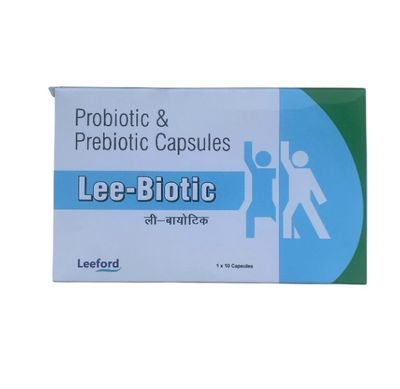
Lee biotic (probiotic & prebiotoc) 10 capsules
Lee biotic (probiotic & prebiotoc) 10 capsules
Intestinal microflora
€12
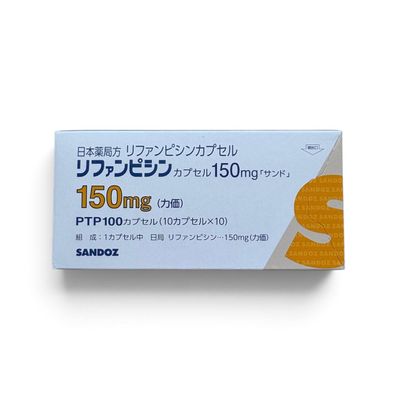
Rifampicin Sandoz (Rifampicin) 150 mg 100 capsules
Rifampicin Sandoz (Rifampicin) 150 mg 100 capsules
Rifampicin 150 mg, 100 capsules — rifamycin antibacterial (Sandoz)
€42
Display prices in:EUR