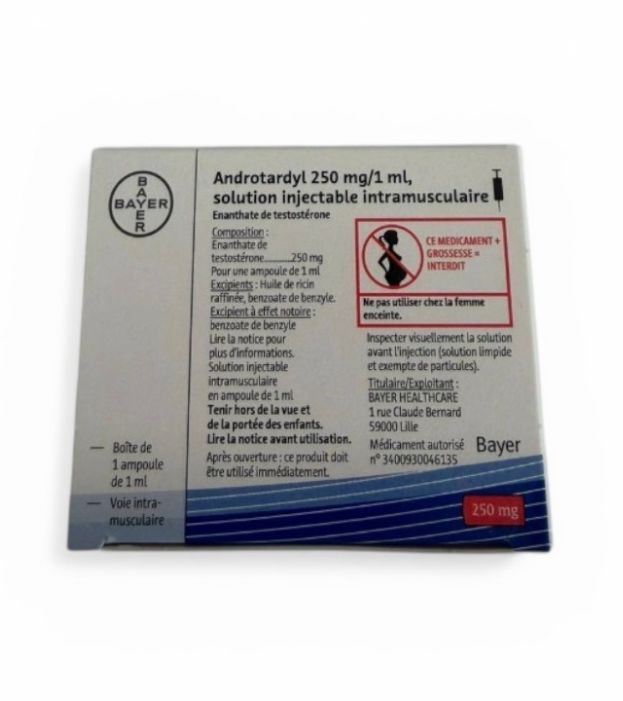
Androtardyl (Testosterone enanthate) 250 mg/ml, 1 ampoule
€61
shipping to the EU only
Hormones
In stock
Androtardyl (Testosterone enanthate) 250 mg/ml, 1 ampoule
Product Details
Androtardyl (Testosterone enanthate) 250 mg/ml, 1 ampoule
1. Composition and form of release
Dosage form: oil solution for injection.
Dosage: 250 mg per 1 ml (1 ampoule).
Packaging: ampoules of 1 ml No. 1
Active ingredient: testosterone enanthate (250 mg/ml).
Auxiliary substances:
Phenylcarbinol (phenylcarbonyl) is often used as a preservative or local anesthetic.
Benzyl benzoate — a solvent that ensures the stability of the solution.
Peanut or peach oil — the injection base (important for patients with peanut allergies).
2. Pharmacodynamics (mechanism of action)
This drug is a depot form of testosterone. Enanthate is an ester that provides prolonged action. After intramuscular injection, it is slowly released from the testosterone depot.
Key Effects of Testosterone:
Androgenic: development of the genitals, secondary sexual characteristics (hair growth, coarsening of the voice), libido.
Anabolic effect: increased protein synthesis, retention of nitrogen, potassium and phosphorus, increased muscle mass.
Hematopoiesis: stimulation of erythropoietin production (increased production of red blood cells).
Pituitary gland: suppresses the secretion of gonadotropins (luteinizing and follicle-stimulating hormones) through a feedback mechanism, which leads to suppression of spermatogenesis (temporary or permanent, depending on the duration of therapy).
Bone growth: accelerates skeletal maturation and can lead to premature closure of epiphyseal plate growth zones (important for adolescents).
3. Important usage Notes
According to standard medical protocols (for example, instructions for the use of testosterone enanthate or testenate), this dosage form is usually intended for intramuscular (deep) injections.
Critical points for monitoring:
Allergy: Because the product contains peanut butter, it is contraindicated in patients with allergies to peanuts or soy.
Monitoring: due to suppression of spermatogenesis and effects on the prostate gland, it is necessary to monitor PSA (prostate-specific antigen) levels and prostate function before and during therapy.
Contraindications (standard): prostate or breast cancer in men, hypercalcemia, severe liver, kidney or heart diseases in the decompensation stage, children (under 18 years of age), hypersensitivity to the components.
📦Find out about the delivery to your country on WhatsApp
Important notice
The photograph is provided for product identification. Packaging design may vary by batch or market. This page provides general product information and does not replace the package leaflet, diagnosis, prescription or advice from a doctor or pharmacist.
You May Also Like
Display prices in:EUR