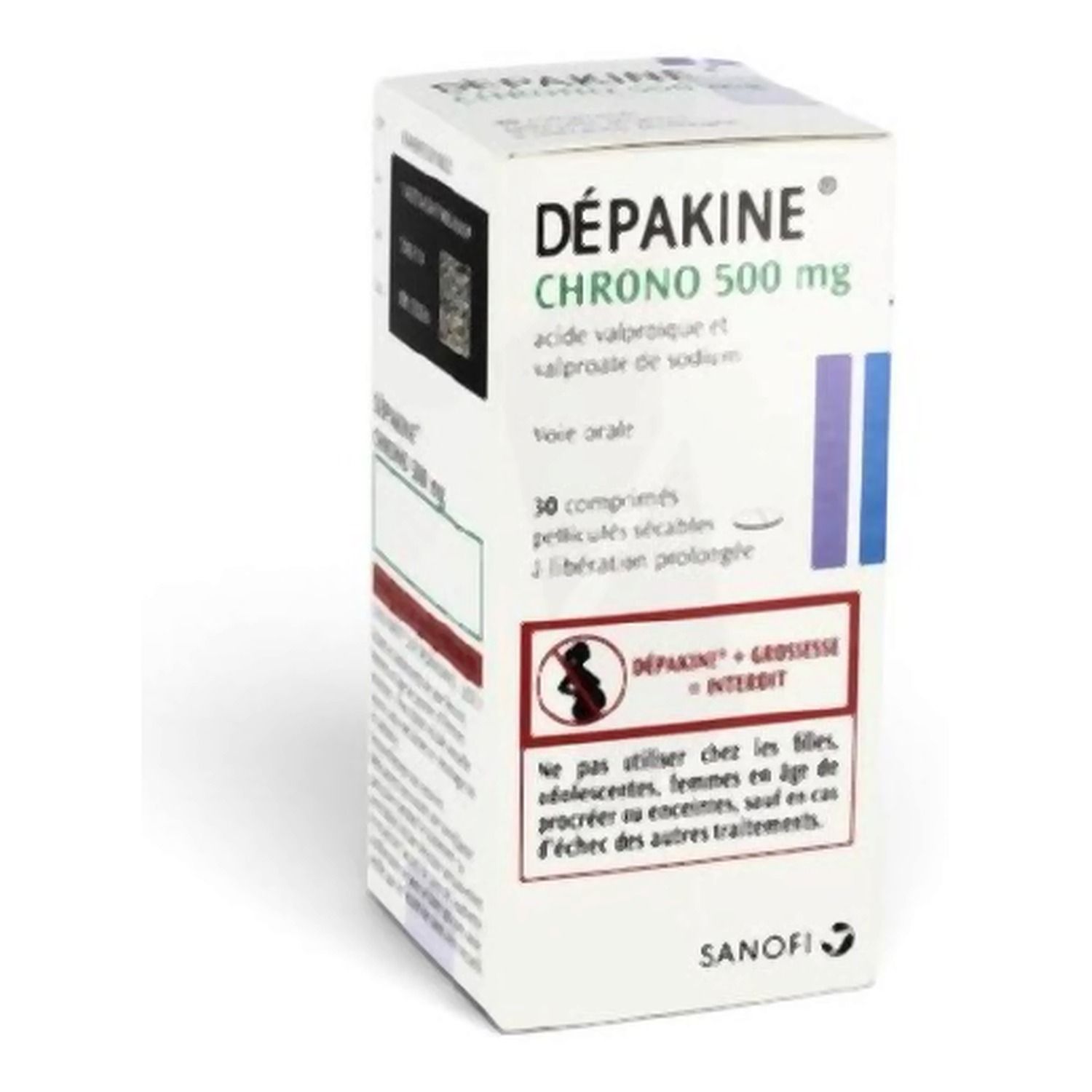
Depakine Chrono 500 mg (Sodium valproate + Valproic acid) prolonged-release tablets 30
€60
Sodium valproate 500 mg equivalent (333 mg sodium valproate + 145 mg valproic acid), 30 divisible prolonged-release film-coated tablets — antiepileptic (ATC N03AG01)
In stock
Depakine Chrono 500 mg (Sodium valproate + Valproic acid) prolonged-release tablets 30
Product Details
Depakine Chrono 500 mg is a prescription antiepileptic in the form of divisible, prolonged-release film-coated tablets containing valproate (333 mg sodium valproate + 145 mg valproic acid per tablet, equivalent to 500 mg sodium valproate). It is used for different forms of epilepsy in adults and in children over 6 years of age weighing more than 17 kg. Because valproate can seriously harm an unborn child, in France it is subject to strict prescription conditions and a pregnancy-prevention programme, and it must be started and monitored by a specialist.
Product overview
- Trade name: Depakine Chrono 500 mg (Dépakine Chrono)
- Active ingredients: sodium valproate 333 mg + valproic acid 145 mg per tablet (equivalent to 500 mg sodium valproate)
- Strength: 500 mg (as valproate) per tablet
- Dosage form: divisible film-coated prolonged-release tablet, oral use
- Pack size: box of 30 tablets (polypropylene tube with a desiccant in the cap)
- Marketing authorisation holder and manufacturer: Sanofi Winthrop Industrie, 82 avenue Raspail, 94250 Gentilly, France (plants in France, Spain and Italy)
- Country: France (French market pack)
- Pharmacotherapeutic class: antiepileptic, ATC N03AG01
What it is used for
Per the French patient leaflet, Depakine Chrono belongs to the family of antiepileptic medicines and is used in the treatment of the various forms of epilepsy in adults and in children over 6 years of age who weigh more than 17 kg. It is not recommended below 6 years of age, because younger children may choke on the tablet; other, more suitable medicines exist for them. Valproate is a major therapeutic-interest medicine under reinforced surveillance in France.
How to use
The daily dose is determined and monitored by the doctor for each patient individually, and is usually divided into 1–2 intakes a day, preferably with meals; where the condition is well controlled, the doctor may prescribe a single daily intake. Always take the tablets with a large glass of water — do not crush or chew them. The tablets are scored and can be split into two equal halves if only half a tablet is prescribed; put the unused half back into the tube. Do not interrupt treatment without medical advice: changing doses, and especially stopping abruptly, can bring the seizures back. If you miss a dose, do not take a double dose. In patients with kidney disorders the doctor may adjust the dose.
Possible side effects
Very common: nausea, tremor. Common: vomiting, stomach pain and diarrhoea at the start of treatment, weight gain, headache, drowsiness, convulsions, memory problems, confusion, aggressiveness, agitation, attention disorders, hallucinations, extrapyramidal symptoms (tremor, limb rigidity, difficulty walking), urinary incontinence, rapid uncontrolled eye movements, hearing loss, gum disorders including gum enlargement, mouth pain, swelling, ulcers and burning (stomatitis), hair loss, menstrual irregularities, bleeding, dizziness, nail and nail-bed disorders, reduced platelets (thrombocytopenia) and red cells (anaemia), low blood sodium. Less common: impaired alertness up to transient coma, coordination difficulties, reversible parkinsonism, numbness or tingling of the hands and feet, hair changes, skin rash, excessive hair growth and acne (hyperandrogenism), low body temperature, oedema, absence of periods, more frequent or more severe or new types of seizures, breathing difficulty and pain from pleural effusion, pancytopenia, severe white-cell reduction, bone fragility. Seek immediate medical help for: balance and coordination problems, lethargy or reduced alertness together with vomiting (possible high blood ammonia); liver or pancreatic injury that can start suddenly with fatigue, loss of appetite, apathy, drowsiness, nausea, vomiting or abdominal pain; allergic reactions including sudden swelling of the face and/or neck with breathing difficulty, febrile rash with enlarged lymph nodes and liver/kidney involvement, blistering skin reactions that can affect the mouth and spread over the body (erythema multiforme, Stevens-Johnson syndrome, Lyell's syndrome); breathing difficulty, chest pain or pressure, shortness of breath and dry cough from fluid around the lungs. Congenital malformations and impaired intellectual and motor development are also listed (see pregnancy warning). Tell your doctor immediately if any side effect becomes serious or lasts more than a few days.
Important precautions
Never take Depakine Chrono if you are pregnant, or are a woman of childbearing potential, unless no other epilepsy treatment works for you and you can follow all the measures of the pregnancy-prevention programme; if you are allergic to valproate or to related substances (divalproate, valpromide) or to any excipient; if you have liver disease (acute or chronic hepatitis) or a personal or family history of severe hepatitis, including drug-induced; if you have hepatic porphyria; if you have a genetic mitochondrial disorder (e.g. Alpers-Huttenlocher syndrome); if you have a known metabolic disorder such as a urea-cycle disorder; if you have untreated carnitine deficiency; or if you take St John's wort. Tell your doctor before use if you have kidney disease or systemic lupus erythematosus, or if a mitochondrial disease runs in the family. The medicine can very rarely cause liver or pancreatic injury that may be life-threatening; blood tests to monitor liver function are prescribed, particularly during the first 6 months. Serious skin reactions (Stevens-Johnson syndrome, toxic epidermal necrolysis, DRESS, erythema multiforme, angioedema) have been reported with valproate. Warn your doctor immediately about sudden fatigue, loss of appetite, apathy, drowsiness, leg swelling or malaise; repeated vomiting, nausea, stomach or abdominal pain, yellowing of the skin or eyes; return of seizures despite correct treatment; or fever with breathing difficulty. If you or your child develop balance and coordination problems, lethargy or reduced alertness, or vomiting, tell your doctor at once — this may be due to increased blood ammonia. WARNING FOR WOMEN: valproate taken during pregnancy can severely harm the unborn child — children exposed in utero have a high risk of serious developmental (intellectual and motor) and behavioural disorders (up to 30–40 % of cases) and/or malformations (about 11 % of cases). For girls, adolescent girls and women of childbearing potential the medicine is only prescribed by a specialist when other treatments have failed or are not tolerated, under a strict pregnancy-prevention programme with effective contraception throughout treatment; a signed information attestation is required and the specialist reviews the need at least once a year. If you are a man of procreative age, read the dedicated information in the leaflet and sign the shared information attestation. Do not stop the medicine on your own. High alcohol intake, overwork and lack of sleep should be avoided as they may trigger seizures.
Storage
Keep out of the sight and reach of children. Do not use after the expiry date shown on the pack (the last day of that month). No special storage temperature is required. Do not throw unused medicines into wastewater or household waste — return them to a pharmacy.
Important notice
This is a prescription medicine (French liste II, with restricted prescribing conditions). The information above is a summary of the French patient leaflet and is provided for reference only: it does not replace the advice of your doctor or pharmacist and is not a recommendation to use the product without medical supervision. Product photos are for identification purposes.
📦 Ask about availability and delivery to your country on WhatsApp
You May Also Like
Delivery within the EU only.
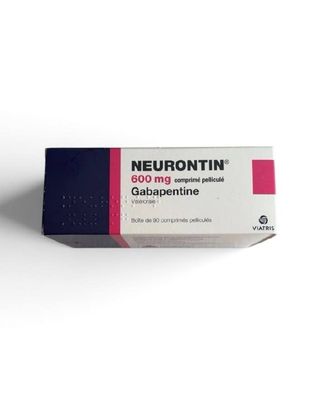
Neurontin (Gabapentin) 600 mg 90 film-coated tablets
Neurontin (Gabapentin) 600 mg 90 film-coated tablets
Gabapentin 600 mg, 90 film-coated tablets — anticonvulsant
€92
Display prices in:EUR