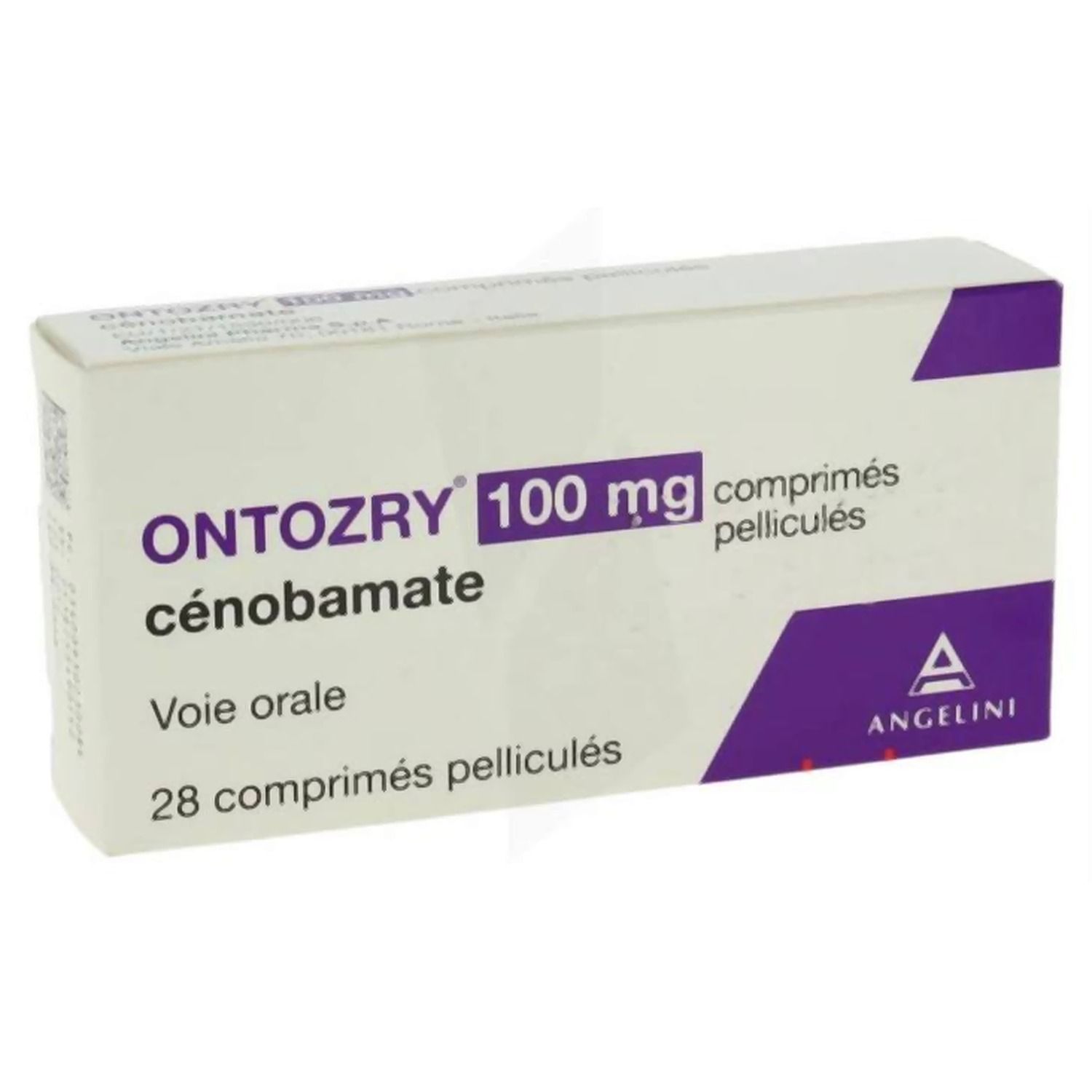
Ontozry (Cenobamate) 100 mg 28 tablets
€220
Cenobamate 100 mg, 28 film-coated tablets — add-on antiepileptic for focal-onset seizures in adults
In stock
Ontozry (Cenobamate) 100 mg 28 tablets
Product Details
Ontozry 100 mg (cenobamate) — 28 film-coated tablets
Ontozry 100 mg is a prescription antiepileptic medicine in the form of film-coated tablets containing cenobamate. It is used as an add-on treatment in adults whose focal-onset (partial) seizures are not controlled by at least two previous antiepileptic treatments. This is a French-market pack of 28 tablets; the marketing-authorisation holder is Angelini Pharma S.p.A. (Italy). In the European Union the medicine is subject to additional monitoring.
Product overview
- Trade name: Ontozry 100 mg, comprimés pelliculés
- Active ingredient: cenobamate 100 mg per film-coated tablet
- Strength: 100 mg
- Dosage form: film-coated tablet for oral use (round, brown, marked «AV» on one side and «100» on the other)
- Pack size: box of 28 film-coated tablets (PVC/aluminium blister)
- Marketing authorisation holder: Angelini Pharma S.p.A., Viale Amelia 70, 00181 Rome, Italy
- Manufacturer (batch release): Aziende Chimiche Riunite Angelini Francesco ACRAF S.p.A., Via Vecchia del Pinocchio 22, 60131 Ancona, Italy
- Country: France (French-market pack; holder and manufacturer are Italian)
- Product category: antiepileptic, ATC code N03AX25
- Notable excipient: lactose monohydrate
- Dispensing status: prescription only (French list I); EU additional monitoring
What cenobamate is used for
According to the EU summary of product characteristics, Ontozry is indicated in adults with epilepsy that has not been controlled by at least two previous treatments, for the adjunctive (add-on) treatment of focal-onset seizures with or without secondary generalisation. It is always taken together with other antiepileptic medicines, not instead of them.
How to use
Cenobamate is taken once a day at the same time each day, with or without food; the tablet is swallowed whole with a glass of water. Treatment must be started at 12.5 mg once daily and increased slowly — the titration schedule has to be followed strictly because of the risk of serious adverse reactions:
- Weeks 1–2: 12.5 mg/day; weeks 3–4: 25 mg/day
- Weeks 5–6: 50 mg/day; weeks 7–8: 100 mg/day
- Weeks 9–10: 150 mg/day; from week 11–12 onwards: target dose 200 mg/day
- Some patients who do not reach optimal seizure control may go above 200 mg (increases of 50 mg/day every two weeks) up to a maximum of 400 mg/day.
- If a dose is missed, take it as soon as possible unless the next dose is due in less than 12 hours.
- Treatment should be withdrawn gradually (over at least 2 weeks) unless a rapid stop is required for safety reasons.
- Lower maximum doses apply in kidney or liver impairment; cenobamate is not recommended in end-stage renal disease, in patients on haemodialysis or in severe hepatic impairment. Safety and efficacy in children and adolescents under 18 have not been established.
The tablets have no break line and cannot be split accurately. They may be taken whole or crushed; a crushed tablet can be mixed with water and given by mouth or through a nasogastric tube.
Possible side effects
The most frequently reported reactions are somnolence, dizziness, fatigue and headache. In clinical studies the most common reasons for stopping treatment were ataxia, dizziness, somnolence, nystagmus, vertigo and double vision — these reactions are dose-related, which is why the titration schedule must be respected.
- Very common: sleepiness, problems with coordination and walking, headache
- Common: dizziness, vertigo, unsteadiness, ataxia, fatigue, confusion, irritability, slurred speech, nystagmus, difficulty finding words, memory impairment, double or blurred vision, constipation, diarrhoea, nausea, vomiting, dry mouth, rash, raised liver enzymes
- Uncommon: hypersensitivity reactions, suicidal thoughts
- Rare: drug reaction with eosinophilia and systemic symptoms (DRESS syndrome), liver injury
Seek medical help immediately if fever or a skin rash appears, especially together with swollen glands or feeling generally unwell — these can be the first signs of a serious hypersensitivity reaction.
Important precautions
- Do not take Ontozry if you are allergic to cenobamate or to any of the excipients, or if you have familial short QT syndrome (a rare inherited heart condition).
- Suicidal thoughts and behaviour have been reported with antiepileptic medicines, including cenobamate. Patients and carers should watch for changes in mood or behaviour and contact a doctor.
- Serious skin reactions (DRESS) have been reported, mainly when treatment was started at a higher dose or increased too quickly. Ontozry must always be started at 12.5 mg once daily and titrated no faster than every two weeks.
- Liver enzymes, bilirubin and alkaline phosphatase should be checked before starting treatment and monitored during it; rare cases of severe liver injury have been reported.
- Cenobamate shortens the QT interval in a dose-dependent manner and should be used with caution together with other medicines known to shorten QT.
- Tell your doctor about all other medicines: cenobamate can reduce exposure to substances metabolised by CYP3A4 and CYP2B6 and increase exposure to those metabolised by CYP2C19; levels of phenytoin, phenobarbital and the active metabolite of clobazam may rise. Alcohol and other central nervous system depressants increase neurological side effects.
- Contains lactose: patients with galactose intolerance, total lactase deficiency or glucose-galactose malabsorption should not take this medicine.
- Pregnancy and breastfeeding: discuss with your doctor before use — antiepileptic treatment must not be stopped suddenly.
- Do not drive or operate machinery if you feel sleepy, dizzy or unsteady.
Storage
Shelf life 5 years. This medicine does not require any special storage conditions. Keep out of the sight and reach of children. Do not use after the expiry date printed on the pack.
Important notice
The pack photo is shown for identification purposes; packaging design and leaflet language may vary between markets. This text summarises the official EU product information and is not a substitute for the advice of your doctor or pharmacist. Ontozry is a prescription medicine and must be used only under medical supervision.
📦 Ask about availability and delivery to your country on WhatsApp
You May Also Like
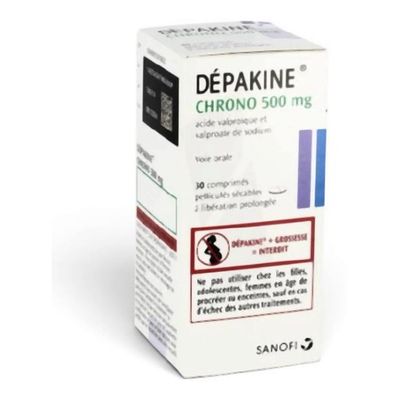
Depakine Chrono 500 mg (Sodium valproate + Valproic acid) prolonged-release tablets 30
Depakine Chrono 500 mg (Sodium valproate + Valproic acid) prolonged-release tablets 30
Sodium valproate 500 mg equivalent (333 mg sodium valproate + 145 mg valproic acid), 30 divisible prolonged-release film-coated tablets — antiepileptic (ATC N03AG01)
€60
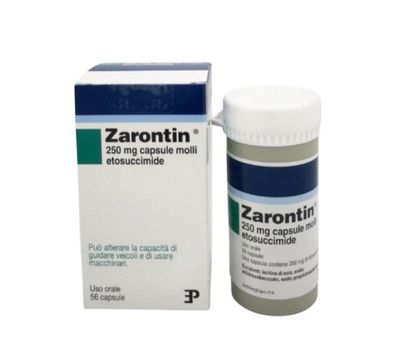
Delivery within the EU only.
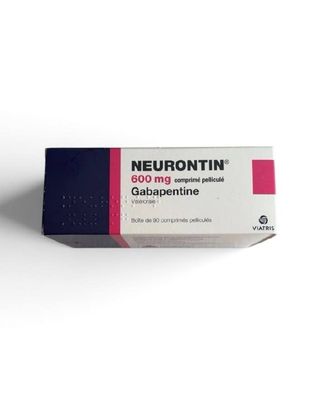
Neurontin (Gabapentin) 600 mg 90 film-coated tablets
Neurontin (Gabapentin) 600 mg 90 film-coated tablets
Gabapentin 600 mg, 90 film-coated tablets — anticonvulsant
€92
Display prices in:EUR