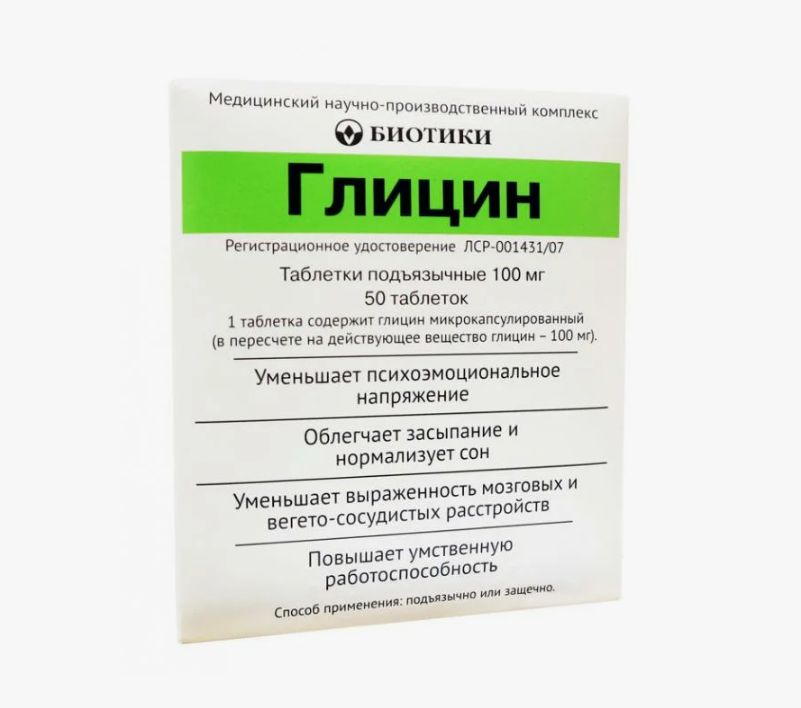
Glycine 100 mg 50 tablets
€22
The nervous system
In stock
Glycine 100 mg 50 tablets
Product Details
Glycine 100 mg 50 tablets
Instructions for medical use of the drug Glycine
International nonproprietary name: Glycine
Dosage form: sublingual tablets
Composition per tablet:
Active ingredient: Microcapsulated glycine – 100 mg.
Auxiliary substances: water–soluble methylcellulose - 1 mg, magnesium stearate – 1 mg.
Description: Tablets are white in color, flat-cylindrical in shape with a chamfer.
Pharmacotherapeutic group: nootropic agent.
ATX code: N06BX.
Pharmacological properties:
Glycine is a regulator of metabolism, normalizes and activates protective inhibition processes in the central nervous system, reduces psychoemotional stress, and increases mental performance. It has glycine- and GABA-ergic, alpha1-adrenoblocking, antioxidant, and antitoxic effects.
Indications for use:
Decreased mental performance.
Stressful situations: psychoemotional stress (during exams, conflict situations).
Deviant (deviant from the norm) forms of behavior of children and adolescents.
Functional and organic diseases of the nervous system, accompanied by increased excitability, emotional instability, decreased mental performance and sleep disorders:
neuroses and neurosis-like states;
consequences of neuroinfections and traumatic brain injuries;
perinatal and other forms of encephalopathy (including alcoholic origin).
Ischemic stroke (as part of complex therapy).
Contraindications:
Individual hypersensitivity to the components of the drug.
Method of administration and dosage:
Glycine is applied transbuccally (the tablet is placed behind the cheek or under the tongue until completely dissolved) or sublingually (under the tongue).
Practically healthy children, adolescents and adults with psychoemotional stress, decreased memory, attention, mental performance, mental retardation, and deviant behaviors: 1 tablet (100 mg) 2-3 times a day for 14-30 days.
With functional and organic lesions of the nervous system, accompanied by increased excitability, emotional lability and sleep disorders:
Children under 3 years of age: 0.5 tablets (50 mg) 2-3 times a day for 7-14 days. Then 50 mg once a day for 7-10 days. The daily dose is 100-150 mg, the course dose is 2000-2600 mg.
Children over 3 years of age and adults: 1 tablet (100 mg) 2-3 times a day. The course of treatment is 7-14 days. If necessary, the course can be extended to 30 days, and repeated after 30 days.
For sleep disorders: 0.5-1 tablet (50-100 mg) 20 minutes before bedtime or just before bedtime.
In case of ischemic cerebral stroke: during the first 3-6 hours after the stroke develops, 1000 mg is prescribed transbuccally or under the tongue with one teaspoon of water, then 1000 mg per day for 1-5 days, then 1-2 tablets 3 times a day for the next 30 days.
Side effect:
Allergic reactions are possible.
Overdose:
There is no data on overdose.
Interaction with other drugs:
Reduces the severity of side effects of antipsychotics (neuroleptics), anxiolytics, antidepressants, hypnotics and anticonvulsants.
Special instructions:
Use during pregnancy and lactation: Has not been studied. Use is possible only as prescribed by a doctor.
Effect on the ability to drive vehicles and mechanisms: No effect.
Storage conditions:
In a dry place protected from light, at a temperature not exceeding 25°C. Keep out of reach of children.
Expiration date:
3 years. Do not use after the expiration date indicated on the package.
Conditions of release from pharmacies:
Without a prescription.
📦Find out about the delivery to your country on WhatsApp
Important notice
The photograph is provided for product identification. Packaging design may vary by batch or market. This page provides general product information and does not replace the package leaflet, diagnosis, prescription or advice from a doctor or pharmacist.
You May Also Like
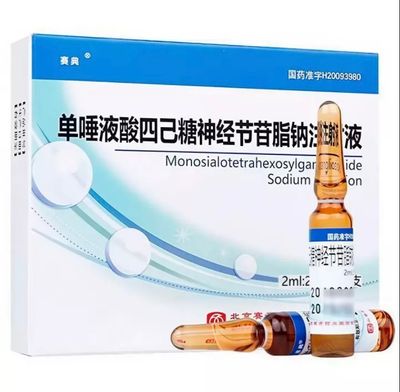
Ganglioside Sodium Injection 20 mg, 6 ampoules/2 ml
Ganglioside Sodium Injection 20 mg, 6 ampoules/2 ml
Treatment of Central Nervous System lesions
€185

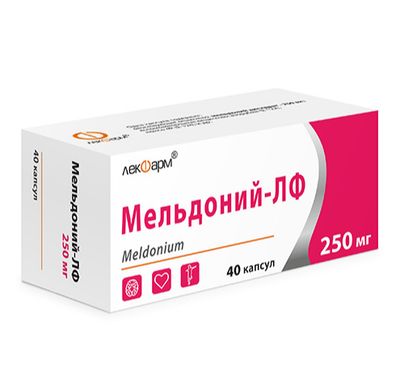
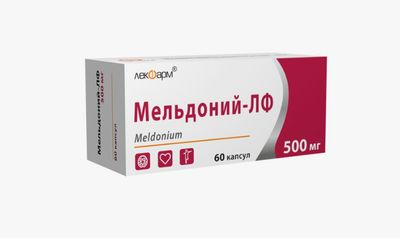
MELDONIUM-LF 250/500 mg 40 capsules
MELDONIUM-LF 250/500 mg 40 capsules
vascular and nervous system
€25
Display prices in:EUR